
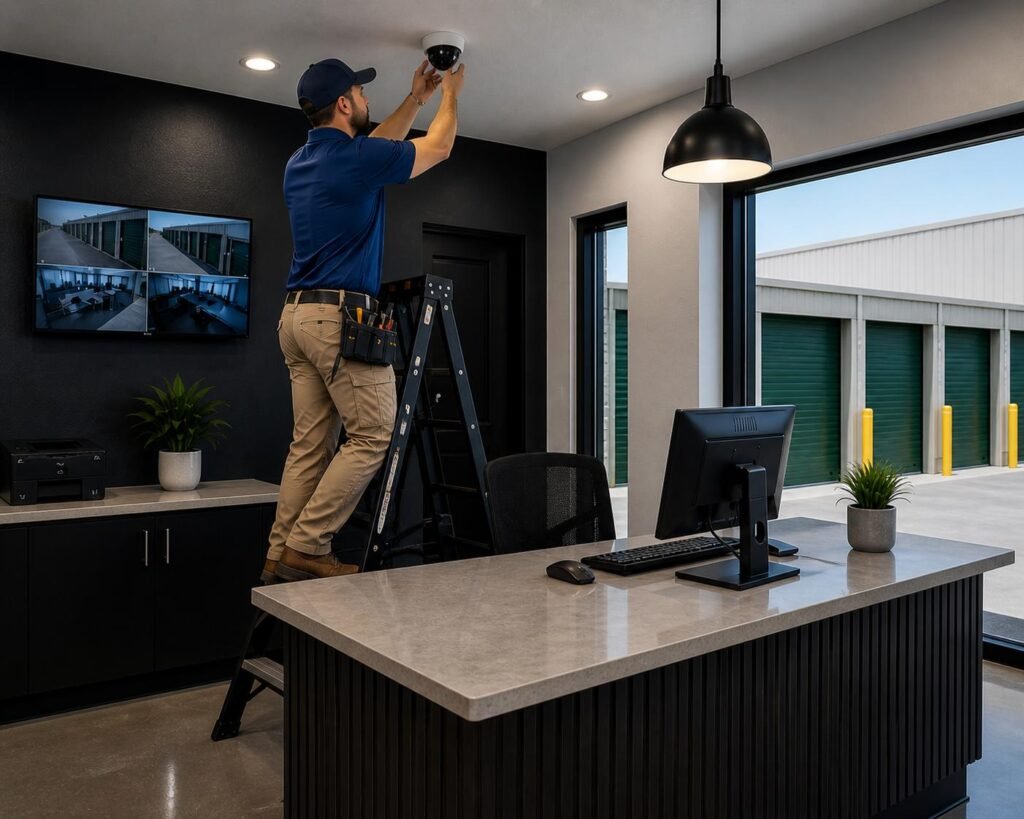
CCTV Camera Installation Services in Chandigarh, Mohali & Panchkula
Security and surveillance are important for businesses that want to protect their premises, monitor daily activities and improve visibility across their facilities. From corporate offices and retail stores to factories, warehouses and commercial buildings, a properly planned CCTV system can help organisations monitor important areas and support their security operations.
Businesses looking for CCTV camera installation services in Chandigarh, Mohali and Panchkula should consider more than just the cameras. Camera placement, cabling, recording equipment, network connectivity and ongoing maintenance all contribute to an effective surveillance system.
Maha Labour & Security Services (MLSS) focuses on security-related requirements for businesses. For projects that also require integrated CCTV infrastructure, access control, networking and other workplace systems, businesses can explore the specialised infrastructure solutions offered by Space2Infra.
Why Do Businesses Need CCTV Camera Installation?
CCTV surveillance can support security operations in a variety of commercial and industrial environments.
Common reasons businesses install CCTV systems include:
- Monitoring entrances, exits and reception areas.
- Improving visibility in offices and common areas.
- Monitoring warehouse storage and loading zones.
- Observing activity around factories and industrial premises.
- Supporting security teams in identifying and reviewing incidents.
- Monitoring parking areas, corridors and perimeter zones.
- Maintaining visibility across multiple operational areas.
The appropriate system depends on the premises, the areas to be monitored and the organisation’s operational requirements.
CCTV Installation Services for Different Business Environments
1. CCTV for Corporate Offices
Corporate offices may require surveillance at reception areas, entry points, corridors, server-room approaches and other designated common areas. Camera placement should support security objectives while respecting employee privacy and applicable workplace policies.
2. CCTV for Shops and Retail Establishments
Retail surveillance can help monitor entrances, billing counters, customer areas and stockrooms. The system should be planned according to the layout, lighting conditions and operational needs of the establishment.
3. CCTV for Factories and Industrial Facilities
Factories often have multiple access points, production areas, material storage locations and vehicle movement zones. CCTV planning should account for the environment, mounting locations, lighting, cable routes and operational safety requirements.
4. CCTV for Warehouses and Logistics Facilities
Warehouses may benefit from surveillance around loading bays, dispatch areas, storage aisles, entry gates and vehicle movement zones. Camera coverage should be planned to minimise blind spots in critical operational areas.
5. CCTV for Commercial Buildings
Commercial buildings may need surveillance for entrances, lobbies, parking areas, service corridors and designated common spaces. A coordinated approach can help align CCTV coverage with the building’s overall security arrangements.
Types of CCTV Systems to Consider
Selecting the right CCTV system requires an assessment of the premises and its security objectives.
IP CCTV cameras: These cameras transmit video over a network and may be suitable for businesses requiring network-based surveillance.
Dome cameras: Commonly considered for indoor areas such as reception spaces, corridors and offices.
Bullet cameras: Often used for designated indoor or outdoor monitoring points, depending on the camera’s environmental rating.
PTZ cameras: Pan-tilt-zoom cameras can provide adjustable viewing and zoom capabilities for suitable locations.
Network Video Recorders (NVRs): Used with compatible IP camera systems to record and manage video footage.
Digital Video Recorders (DVRs): Commonly associated with compatible analogue CCTV systems.
Camera selection should consider image quality, lighting, environmental conditions, recording requirements, network capacity and future expansion.
Important Factors Before Installing CCTV Cameras
Before proceeding with installation, businesses should assess the following:
- Site survey: Identify the areas requiring monitoring and the practical mounting locations.
- Camera placement: Plan coverage for entrances, exits and other priority areas.
- Cabling and connectivity: Determine suitable cable routes and network requirements.
- Recording and storage: Establish how footage will be recorded, retained and accessed.
- Power supply: Plan reliable power and appropriate protection for the equipment.
- Remote viewing: Assess whether authorised users need secure remote access.
- System testing: Check camera views, recording, playback and connectivity after installation.
- Privacy and access controls: Restrict footage access to authorised personnel and follow applicable privacy requirements.
A well-planned installation can make the system easier to operate, maintain and expand.
CCTV and Access Control: A More Integrated Security Approach
For many businesses, CCTV is one part of a broader security infrastructure. Organisations may also need access control readers, biometric devices, card-based entry systems, structured cabling, network racks and related electrical infrastructure.
Coordinating these systems during the planning stage can help reduce infrastructure conflicts and simplify future upgrades.
For commercial and industrial projects requiring CCTV infrastructure, access control, structured cabling, networking and workplace infrastructure, explore Space2Infra. Space2Infra focuses on integrated workplace and infrastructure requirements, helping businesses plan connected systems alongside their wider facility needs.
CCTV Installation in Chandigarh, Mohali and Panchkula
Businesses across Chandigarh, Mohali and Panchkula may have different surveillance requirements depending on their building layouts, industry, operating hours and security arrangements.
Whether the requirement involves an office, shop, warehouse, factory or commercial property, the first step is to define the areas that need monitoring and the outcomes the system should support.
Before appointing a service provider, clarify the scope of work, equipment specifications, cabling requirements, recording arrangements, testing procedures and ongoing support responsibilities.
Frequently Asked Questions
Which CCTV system is suitable for an office?
The choice depends on the office layout, lighting, monitoring requirements, network infrastructure and recording needs. A site assessment helps determine the appropriate camera types and locations.
Can CCTV cameras be connected to a network?
Yes. Compatible IP CCTV systems use network connectivity for video transmission and management. Network capacity, security settings and recording arrangements should be considered during planning.
Can CCTV be integrated with access control?
Yes. Compatible systems can be coordinated so that surveillance and entry-management infrastructure support the organisation’s security arrangements. The level of integration depends on the equipment and system design.
Is CCTV suitable for factories and warehouses?
CCTV can be planned for suitable areas within factories and warehouses, including entry points, loading areas, storage zones and designated operational spaces. Environmental conditions and safety requirements should be considered.
Where can businesses find integrated workplace infrastructure solutions?
Businesses requiring CCTV infrastructure alongside access control, structured cabling, networking, electrical systems and other workplace infrastructure can visit Space2Infra to explore its services.
Conclusion
CCTV installation is an important consideration for businesses seeking better visibility across their premises and more organised security operations. Choosing a suitable system requires careful planning of camera placement, cabling, recording, connectivity, privacy and maintenance.
For businesses in Chandigarh, Mohali and Panchkula, the right approach is to assess the site, define the surveillance objectives and coordinate CCTV with the wider security infrastructure.
For integrated commercial and industrial infrastructure requirements, including CCTV infrastructure, access control, networking and workplace systems, visit Space2Infra.